
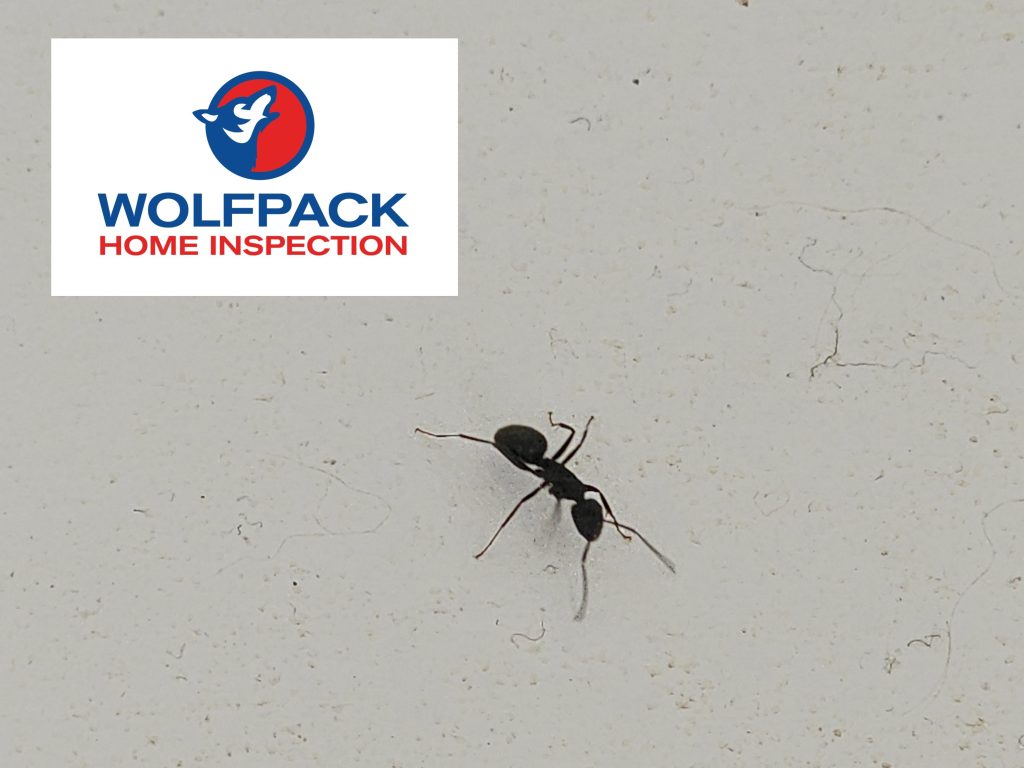
In the lower mainland, we had a sunny Easter Long weekend and I saw it reading 24C on one of the helpful road side stands yesterday. The flowers are blossoming and all is good. Except suddenly it seems like I am seeing big black ants everywhere – what’s with that?
You may notice ants outside or inside – in kitchens, bathrooms, or along baseboards as they search for food and water. Even more noticeable are the winged “swarmers,” reproductive ants that leave established colonies to start new ones. These swarmers are often the first visible sign of a larger, well-established colony that may have been present for years—sometimes without the homeowner even realizing it.
During this spring ‘swarming’ period, it is quite common to encounter ants in the home. This does not necessarily indicate an issue in your home. Advice varies as to what constitutes a trigger to take action, per the helpful BC Government website reference: If you see more than 10-12 ants in your house in an evening, it’s worth investigating whether their nest is in the house. Other sources suggest 10- 12 ants in a hour. You can also look for piles of sawdust (called frass) and even listen when the home is quiet (when ants are excavating wood, you can actually hear the noise). To summarize – seeing a few ants during the next few weeks is common and not necessarily a cause for concern. Seeing ants regularly through the spring and during the rest of year may indicate an issue to be addressed professionally.
This is where the distinction between pest control and home inspection becomes important. Home inspectors are not pest control professionals, but from an inspection perspective, carpenter ants are often a symptom of underlying issues. Unlike termites, they don’t eat wood—they excavate it. Their presence is strongly linked to moisture problems such as roof leaks, poor ventilation, or damp crawl spaces. In many cases, the ants you see indoors are coming from a satellite nest within the home, while the main colony may exist outside in a nearby tree or stump. Over time, their tunneling can weaken structural components like beams and supports, making early awareness critical. Wolf Pack Home Inspectors will observe and report any conspicuous evidence of past or present ant activity noted.
For readers in Squamish, Whistler, and Pemberton, keep in mind that spring arrives a bit later—often around the May long weekend—so you can expect similar activity shortly after the first sustained warm temperatures. Whether you’re in the city or further north, the key takeaway is this: a few ants during early spring can be normal, but consistent or increasing activity is worth investigating. Identifying and addressing the moisture conditions that attract them is far more important than simply treating the ants themselves.